
Sciatica
Back pain comes in all shapes and sizes. It can flare up immediately after an injury or appear slowly and mysteriously over a period of months. It might be sudden and short-lived (acute) or long-lasting (chronic).
Sometimes it’s hard to identify the source of your back pain, but other times you can pinpoint it easily. Sciatica is one of those that’s pretty simple to identify. Home remedies can work fast, so you might not even have to call a doctor.
Sciatica usually starts with a herniated disk in your lumbar (lower) spine. Your vertebrae are separated and cushioned by flat, flexible, round disks of connective tissue. When a disk gets worn down — either because of an injury or just years of use — its soft centre can begin to push out from the hard outer ring. When a disk herniates, it might put pressure on the nerves around it. This can cause a lot of pain when that happens to be the sciatic nerve.
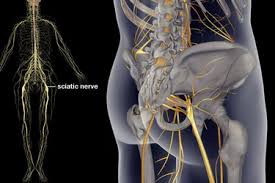
The sciatic nerve is the longest nerve in your body. It starts in your lower back and splits to run through your hips, buttocks, legs, and feet on both sides. Bone spurs and spinal stenosis (narrowing) can also put pressure on the sciatic nerve in the lower back. When that happens, it can cause a lot of problems all the way down the nerve.
The most distinctive sign of sciatica is pain that radiates from your lower back into the back or side or your legs. It can range from a mild ache to sharp, severe pain. You can also get numbness, tingling, and weakness in your leg or foot.
Sciatica is a common type of pain that affects your sciatic nerve, which extends from your lower back through your hips and butt down the back of each leg.
Common symptoms of sciatica include:
- Lower back pain
- Pain in your butt or leg that worsens when you sit
- Hip pain
- Burning or tingling down your leg
- Weakness, numbness, or difficulty moving your leg or foot
- A constant pain on one side of your butt
- A shooting pain down your leg that makes it difficult to stand up
Sciatica usually affects only one side of your lower body. Often, the pain extends from your lower back all the way through the back of the thigh and down through one of your legs. Depending on where your sciatic nerve is affected, the pain may also extend to your foot or toes.
For some people, the pain from sciatica can be severe and make it hard for them to do things they usually do. For others, it might not last long, but it bothers them and it has the potential to get worse.
What Causes It?
Sciatica is caused when the sciatic nerve is pinched, usually from a herniated disk or bone spur. Other common causes of sciatica include:
- Lumbar spinal stenosis (narrowing of the spinal canal in your lower back)
- Degenerative disk disease (breakdown of disks, which act as cushions between your vertebrae)
- Spondylolisthesis (a condition in which one vertebra slips forward over another one)
- Pregnancy
- Muscle spasm in your back or buttocks
Other things that can make your back pain worsen include being overweight, not exercising regularly, wearing high heels, or sleeping on a mattress that is too soft.
When to find help…..
Your sciatica may go away on its own, but if your pain is severe or doesn’t go away, you may want to see your doctor for pain relief, however, the most effective is manual treatment whom can be from a sports massage therapist or sports therapist if your Sciatica is very severe and could be stemmed from dysfunction somewhere else. effective treatment can ease from one session.
Certain stretches may provide some relief for people experiencing sciatica-related pain.
Most people with sciatica do find stretching helps relieve pain. However, people with sciatica should speak to a doctor before doing any sciatica stretches to avoid further injury.
A therapist may recommend that people perform several of these stretches each day:
- knees to chest
- cobra or modified cobra
- seated hip stretch
- standing hamstring stretch
- seated spinal twist
- knee to shoulder

Treatment
As well as stretching, some people who experience sciatica symptoms also try other home remedies to ease their pain and discomfort.
Other home remedies include the following:
- Ice: Icing the area for 5 minutes several times a day for the first two to three days after the pain begins.
- Heat: Using heat on the area after the first few days.
Anyone that experiences sciatica for longer than a month should seek medical attention. Additionally, any person that has severe sciatica should seek medical care as soon as possible.